


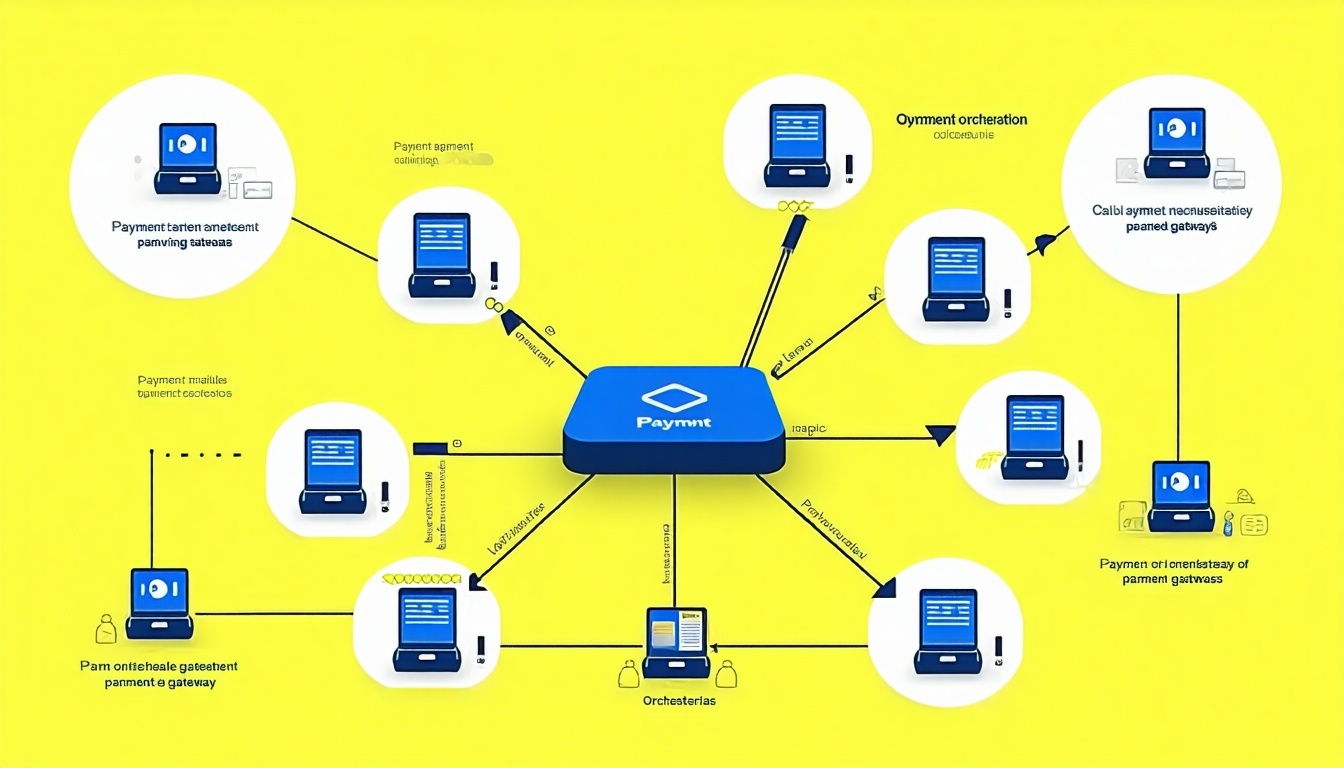
Ever wondered how businesses seamlessly manage multiple payment methods and gateways? Welcome to the world of payment orchestration, a game-changer in the financial services industry.
The Evolution of Payment Orchestration
In the past, businesses relied on a single payment gateway to process transactions. This approach was often plagued by inefficiencies, higher costs, and limited flexibility. As e-commerce expanded and global markets became more interconnected, the need for more robust and flexible payment solutions became apparent.
Payment orchestration emerged as a solution to these challenges. Initially, it involved integrating multiple payment gateways to enhance transaction success rates and reduce costs. Over time, it has evolved into a sophisticated system that not only manages multiple payment methods but also optimizes the entire payment process, from transaction routing to fraud management.
How Does Payment Orchestration Work?
Payment orchestration works by acting as a centralized hub that connects various payment gateways, payment methods, and other financial services. When a customer initiates a transaction, the orchestration platform routes the payment through the most efficient gateway, taking into account factors such as transaction fees, success rates, and geographical considerations.
The platform also handles other critical tasks such as currency conversion, compliance with local regulations, and fraud detection. By streamlining these processes, payment orchestration ensures that transactions are processed quickly, securely, and cost-effectively.
Key Benefits of Using a Payment Orchestration Platform
One of the primary benefits of payment orchestration is increased transaction success rates. By intelligently routing transactions through the most appropriate gateways, businesses can significantly reduce the number of failed transactions.
Another major benefit is cost savings. Payment orchestration platforms often have built-in features that allow businesses to minimize transaction fees by selecting the most cost-effective payment providers. Additionally, these platforms offer enhanced security and fraud protection, reducing the risk of financial losses.
Financial Impacts of Payment Orchestration
The financial impacts of payment orchestration can be substantial. By optimizing transaction routing and reducing fees, businesses can save significant amounts of money. These savings can then be reinvested into other areas of the business, such as marketing, product development, or customer service.
Moreover, the improved transaction success rates lead to higher customer satisfaction and increased sales. A seamless payment experience can encourage repeat business and foster customer loyalty, contributing to long-term financial growth.
Challenges and Considerations in Payment Orchestration
Despite its many benefits, payment orchestration is not without challenges. One of the main hurdles is the complexity of integrating multiple payment gateways and ensuring they work seamlessly together. This requires a robust technical infrastructure and ongoing maintenance.
Additionally, businesses must navigate the regulatory landscape, which can vary significantly from one region to another. Ensuring compliance with local laws and regulations is critical to avoid legal complications and potential fines. Lastly, businesses must remain vigilant against evolving security threats, as the centralized nature of payment orchestration platforms can make them attractive targets for cybercriminals.